
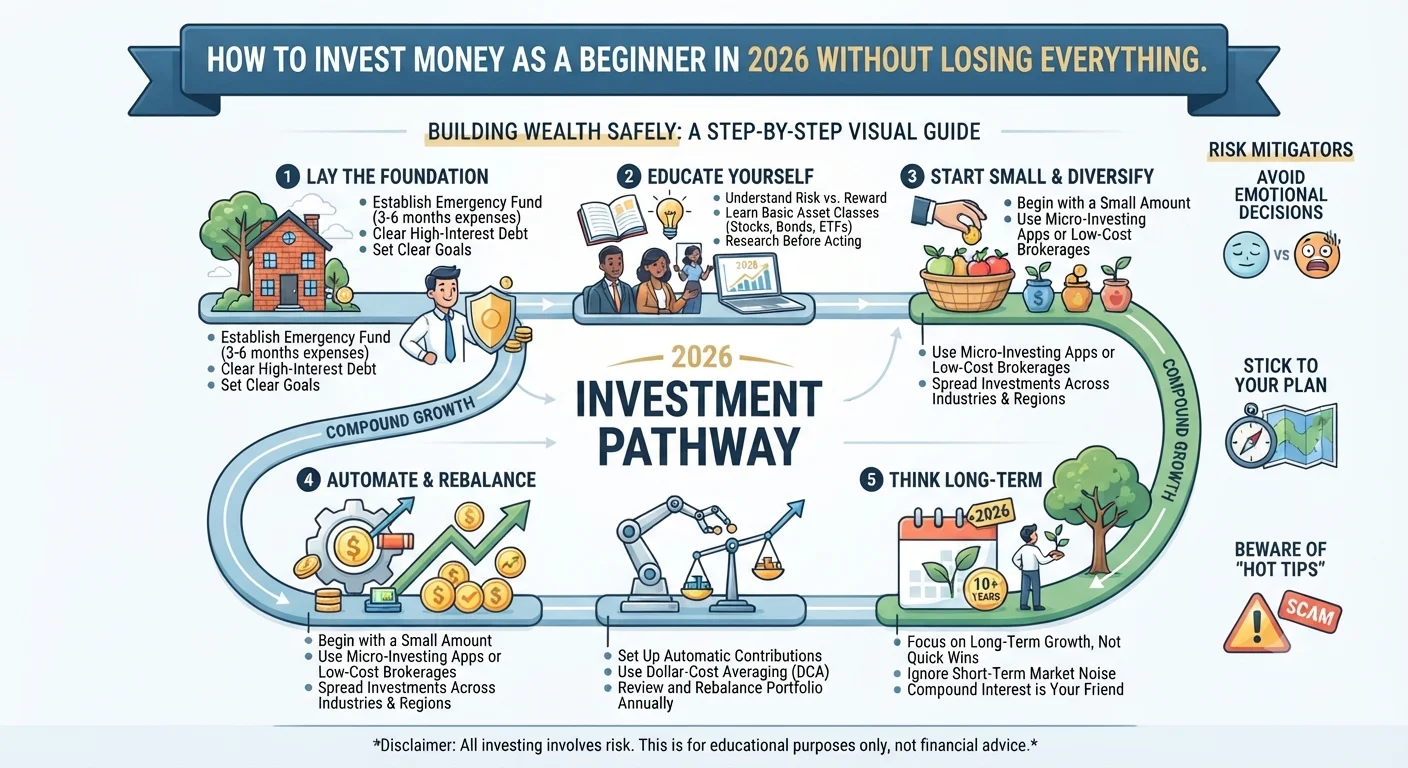
Investing feels intimidating to most beginners largely because of fear of making costly mistakes with hard earned money. This guide breaks down the essential principles of investing for beginners in a way that is practical honest and focused on protecting your capital while building knowledge.
Why Investing Matters for Your Financial Future
Keeping all your money in a savings account means inflation gradually reduces its real purchasing power over time. Investing creates the possibility of your money growing faster than inflation over time though it also introduces the possibility of losses which is why understanding the basics before starting matters so much.
The goal for most beginners is not to get rich quickly but to build a foundation of knowledge and habits that allow money to grow responsibly over time with appropriate risk management.
Understand Your Financial Situation Before Investing Anything
- Why Investing Matters for Your Financial Future
- Understand Your Financial Situation Before Investing Anything
- The Core Principle Only Invest What You Can Afford to Lose
- Start by Learning Before Committing Significant Capital
- Understand the Relationship Between Risk and Potential Return
- Diversification Reduces Concentration Risk
- Start Small and Scale as Knowledge Grows
- Keep Records of Every Investment Decision
- Common Investing Mistakes Beginners Make
- Frequently Asked Questions About Investing for Beginners
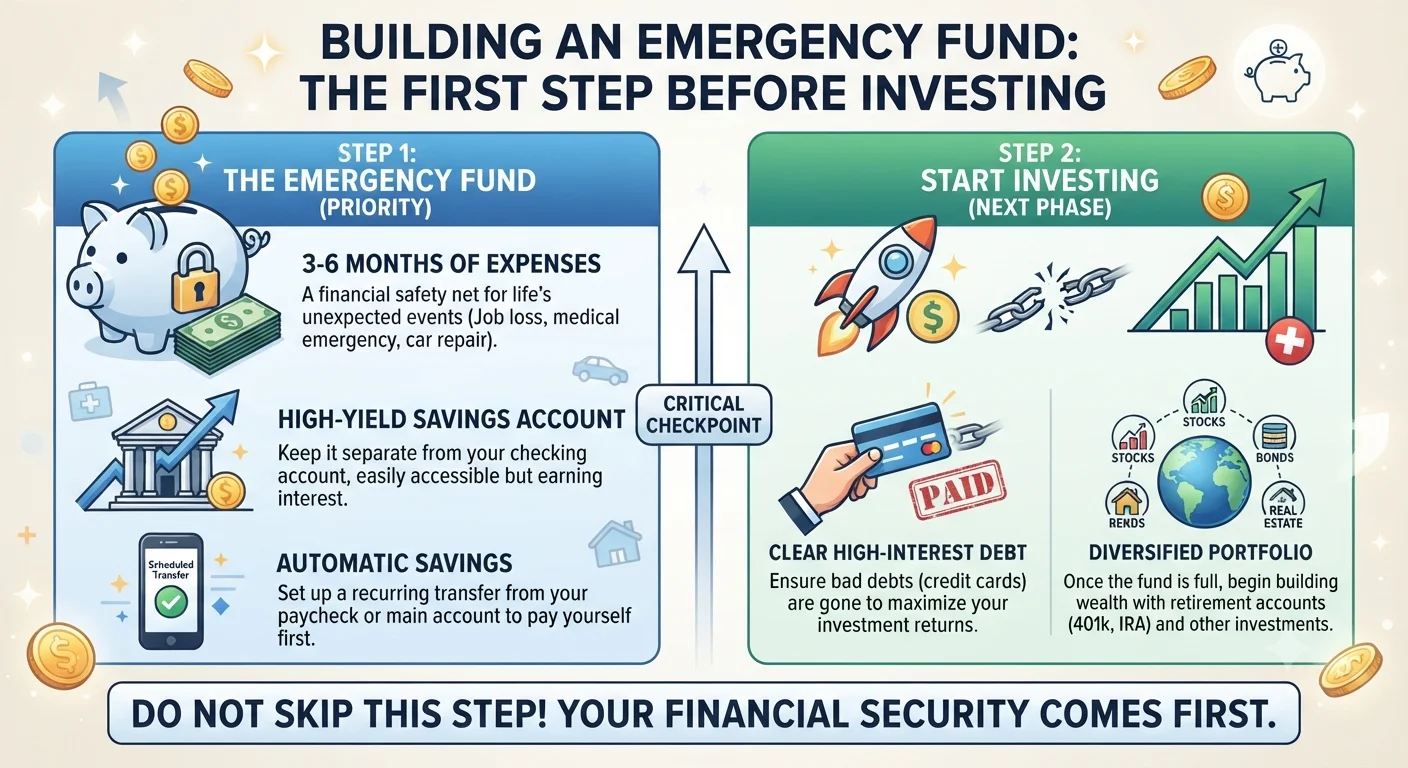
Before putting any money into any investment start by honestly assessing your current financial situation. Do you have an emergency fund covering at least three to six months of essential expenses. Are there high interest debts outstanding that should be addressed first. Can you genuinely afford to set aside money for investing without affecting essential living expenses.
- How Successful Binary Options Traders Think Differently From Losing Traders
- What Is Overtrading in Binary Options and How to Recognize It in Yourself
- How to Control Your Emotions While Trading Binary Options Without Making Mistakes
Answering these questions honestly ensures you are starting from a position of genuine financial stability rather than investing money you may need for essential purposes in the near future.
The Core Principle Only Invest What You Can Afford to Lose
This principle applies to every form of investing whether you are putting money into stocks cryptocurrency binary options trading or any other vehicle. The possibility of loss exists in all of these areas and investing money needed for rent groceries or emergency expenses creates financial vulnerability that can cause poor decision making driven by desperation rather than sound analysis.
Setting aside a specific amount designated specifically for investing separate from your essential living expenses budget protects both your financial stability and your decision making quality.
Start by Learning Before Committing Significant Capital
Many beginners make the mistake of committing significant capital before genuinely understanding how their chosen investment vehicle works. This is often driven by excitement or fear of missing out rather than genuine readiness.
Taking time to study the basics before committing meaningful amounts of money is not wasted time. It is one of the most valuable investments you can make in your own long term success as an investor regardless of which specific market or vehicle you choose.
Understand the Relationship Between Risk and Potential Return
A fundamental principle of investing is that higher potential returns generally come with higher potential risk. Any investment promising very high guaranteed returns with minimal risk is almost certainly misrepresenting the reality of the opportunity involved.
Understanding this relationship helps you evaluate investment opportunities more critically and avoid the kind of unrealistic expectations that often lead beginners toward unnecessarily risky decisions or outright scams.
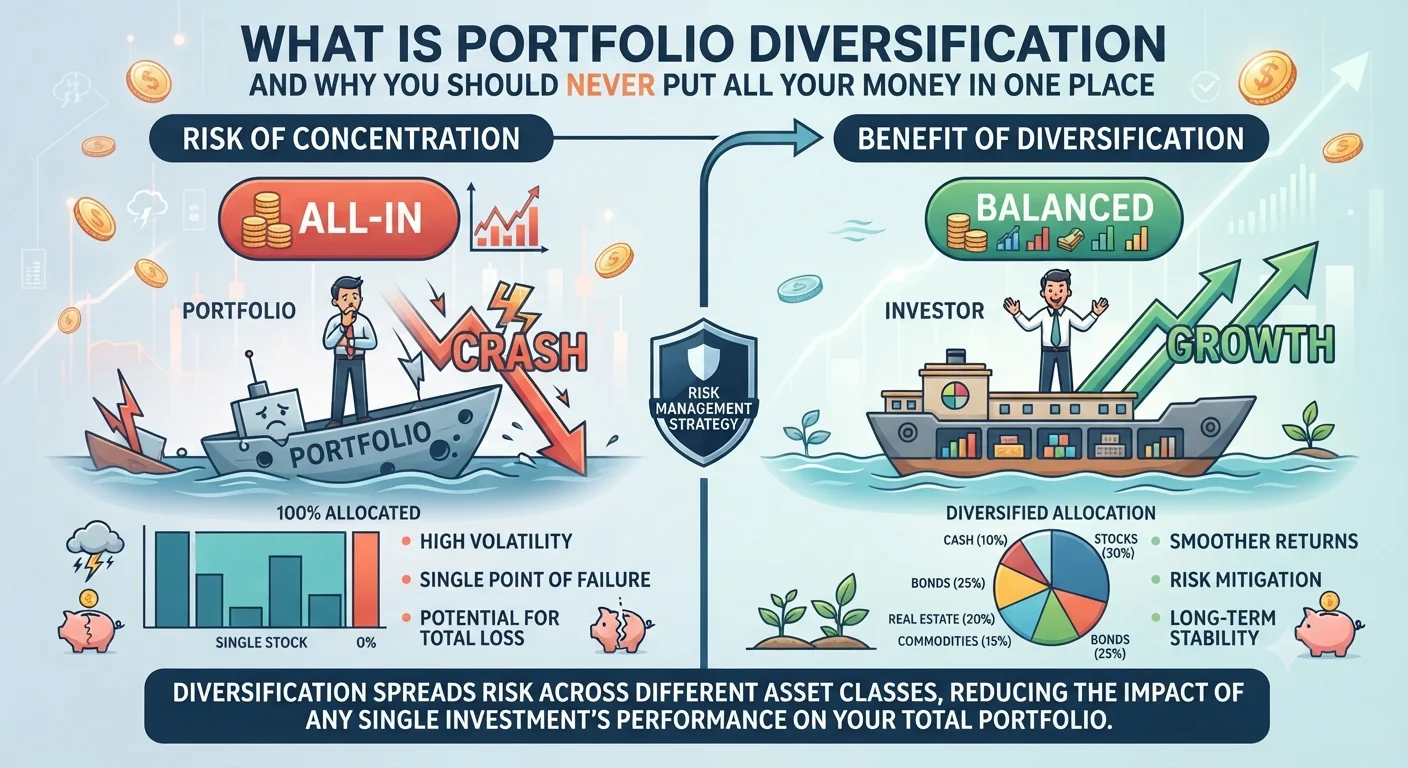
Diversification Reduces Concentration Risk
Putting all your available investment capital into a single asset or strategy concentrates your risk entirely in one place. If that single investment performs poorly your entire invested capital suffers accordingly.
Recommended Articles
 INVESTMENT TIPS
 INVESTMENT TIPS
 INVESTMENT TIPS
 INVESTMENT TIPS
Spreading your capital across different assets strategies or investment types means no single poor performer can devastate your entire portfolio at once. This basic principle of diversification is applied by investors across every level of experience from complete beginners to highly experienced professionals.
Start Small and Scale as Knowledge Grows
Beginning with smaller amounts while you are still learning is a sensible approach that limits your financial exposure during the period when mistakes are most likely to occur. As your knowledge and confidence grow through genuine experience you can gradually increase your capital commitment in line with your improving skills.
Rushing to invest large amounts before developing genuine competence typically leads to larger losses during the inevitable learning curve rather than the faster profits that motivated the rushed approach in the first place.
Keep Records of Every Investment Decision
Maintaining records of your investment decisions including your reasoning at the time of the decision and the eventual outcome provides invaluable learning material over time. These records help you identify patterns in your decision making both positive and negative that would be impossible to recognize without a written history to review.
This record keeping habit is discussed throughout our trading education content as a trading journal and applies equally to broader investing beyond binary options trading specifically.
Common Investing Mistakes Beginners Make
One common mistake is investing based on tips from friends or social media without conducting any independent research into the opportunity. Another common mistake is panic selling during periods of market decline which converts a temporary unrealized loss into a permanent realized one.
Chasing assets or strategies that have recently performed very strongly based on past performance alone without considering current valuation or conditions is another frequently repeated mistake among beginners across all forms of investing.
Frequently Asked Questions About Investing for Beginners
How much money do I need to start investing You can start investing with relatively small amounts in many vehicles though the most important consideration is that any money you invest should be genuinely affordable to lose without affecting your essential financial obligations.
Should I pay off debt before investing High interest debt typically costs more than most investments can reasonably return which makes addressing it first a sound financial priority before committing significant capital to investing.
Is it better to invest a lump sum or smaller amounts regularly Both approaches have merit and the best choice depends on your personal financial situation. Regular smaller contributions over time allow you to gradually build your position while managing the risk of investing a large amount at an unfavorable moment.
How do I know which investment is right for me This depends on your goals risk tolerance time horizon and the amount of time you are willing to dedicate to learning and monitoring your investments. There is no universally right answer that applies equally to every individual.
What is the biggest mistake beginners make when investing Investing money they cannot genuinely afford to lose or committing significant capital before developing genuine understanding of how their chosen investment vehicle actually works are among the most common and costly beginner mistakes.
Understanding passive income as a concept helps many beginning investors clarify their longer term financial goals. Continue reading our guide on what passive income means and whether binary options can become a genuine source of it.
This article is for educational purposes only and does not constitute financial advice. Investing involves risk and you should only commit money you can genuinely afford to lose.