
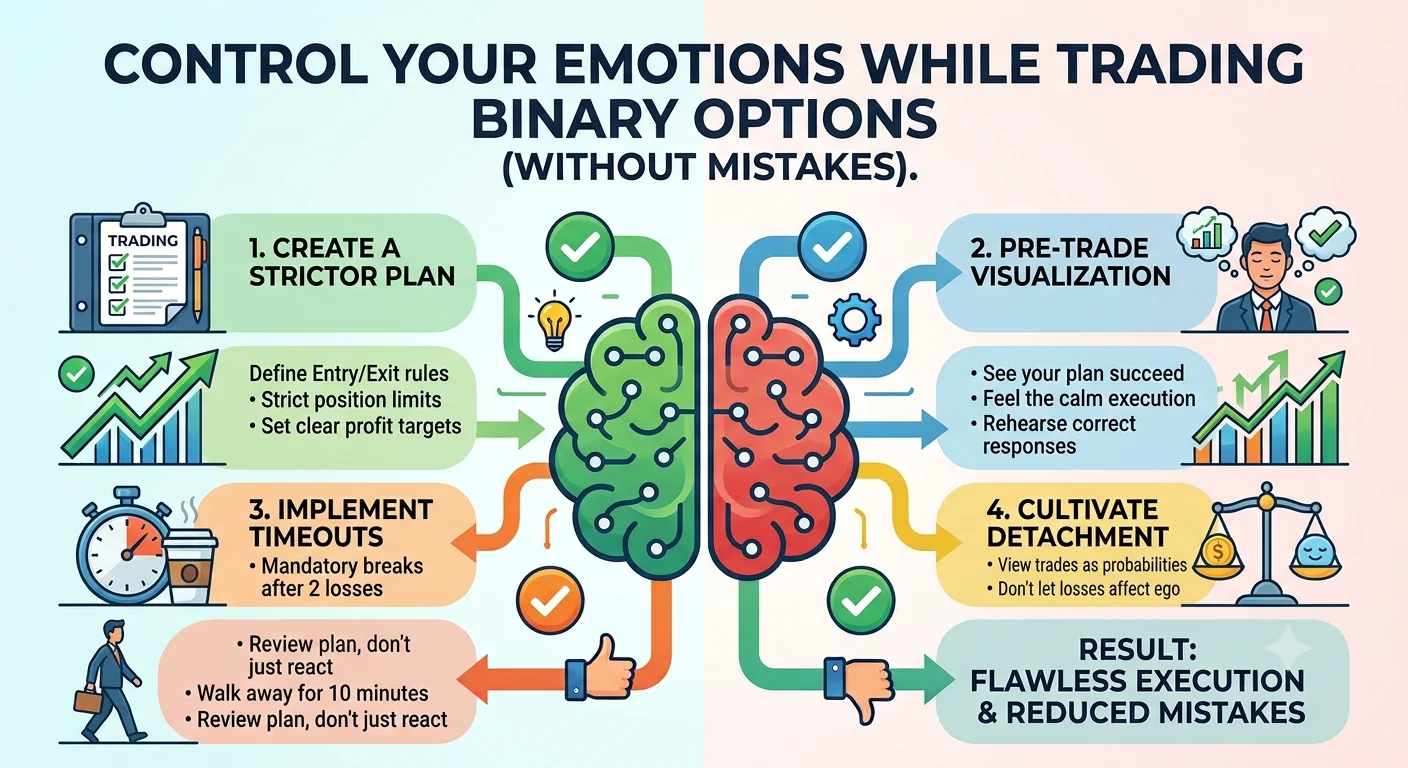
Understanding trading psychology in theory is one thing. Actually controlling your emotions during a live trading session with real money at stake is an entirely different challenge. This guide provides practical techniques you can apply immediately to maintain discipline while trading.
Why Emotional Control Is Difficult During Live Trading
Real money trading triggers genuine emotional responses that are difficult to replicate during demo account practice. The fear of loss and the excitement of potential profit activate psychological responses that can override even carefully planned strategies if you are not prepared with specific techniques to manage these reactions.
Recognizing that this difficulty is completely normal rather than a personal weakness is an important first step toward developing better emotional control over time.
Technique One Set Clear Rules Before You Start Trading
- Why Emotional Control Is Difficult During Live Trading
- Technique One Set Clear Rules Before You Start Trading
- Technique Two Use a Mandatory Pause After Losses
- Technique Three Focus on Process Rather Than Individual Outcomes
- Technique Four Practice Deep Breathing or Brief Mindfulness
- Technique Five Set a Maximum Number of Trades Per Session
- Technique Six Separate Trading Time From Personal Stress
- How Long It Takes to Develop Genuine Emotional Control
- Frequently Asked Questions About Controlling Trading Emotions
Before beginning any trading session write down your specific entry criteria position size and maximum daily loss limit. Having these rules clearly defined before emotions are activated by live market conditions makes it significantly easier to follow them once you begin trading.
Refer back to these written rules during your session whenever you feel tempted to deviate from your plan based on a recent win or loss rather than relying on memory alone during emotionally charged moments.
Technique Two Use a Mandatory Pause After Losses
Implement a personal rule requiring a mandatory pause of a specific length such as fifteen minutes after any losing trade before placing another one. This brief pause creates space between the emotional reaction to a loss and your next decision which often prevents impulsive revenge trading.
During this pause step away from your trading screen entirely rather than continuing to watch charts which can keep emotional intensity elevated rather than allowing it to settle.
Technique Three Focus on Process Rather Than Individual Outcomes
Shift your attention from the result of any single trade toward whether you followed your predetermined process correctly. A trade that loses despite being placed according to your proper analysis and risk management rules should be viewed differently than a trade that wins despite ignoring your own rules through impulsive decision making.
This process focused mindset helps reduce the emotional intensity tied to individual outcomes since you are evaluating your discipline rather than treating every single trade result as a personal reflection of your worth or skill.
Technique Four Practice Deep Breathing or Brief Mindfulness
Simple techniques such as taking several slow deliberate breaths before placing a trade can help interrupt impulsive emotional reactions and create a brief moment for more rational thinking to take over. This does not need to be complicated and can be as simple as pausing for ten seconds while breathing slowly before confirming any trade.
This brief pause allows you to genuinely check whether you are placing this trade based on your analysis or based on an emotional impulse you have not fully acknowledged.
Recommended Articles
 INVESTMENT TIPS
 INVESTMENT TIPS
 INVESTMENT TIPS
 INVESTMENT TIPS
Technique Five Set a Maximum Number of Trades Per Session
Limiting yourself to a specific maximum number of trades within a single session helps prevent overtrading which often occurs when emotions such as frustration or excitement drive you to continue placing trades beyond what your original analysis actually supported.
- What Is Trading Psychology and Why It Determines Whether You Win or Lose
- How to Create a Trading Plan for Binary Options That Keeps You Disciplined
- What Is the 1 Percent Rule in Trading and How to Use It to Protect Yourself
Once you reach your predetermined maximum stop trading for that session regardless of how you feel in the moment. This rule protects you from the cumulative emotional fatigue that often develops during extended trading sessions.
Technique Six Separate Trading Time From Personal Stress
Avoid trading during periods of significant personal stress unrelated to the markets themselves such as immediately after a difficult conversation or during a particularly overwhelming day. Personal emotional state outside of trading can significantly influence your decision making within trading even when the two situations seem unrelated.
Recognizing when you are not in an appropriate emotional state to trade and choosing to step away entirely for that day is itself a form of disciplined emotional control.
How Long It Takes to Develop Genuine Emotional Control
Developing strong emotional control while trading is a gradual process that typically improves with consistent deliberate practice over weeks and months rather than something achieved immediately. Be patient with yourself during this process and view occasional emotional mistakes as learning opportunities documented in your trading journal rather than reasons for harsh self criticism.
Frequently Asked Questions About Controlling Trading Emotions
Why is it harder to control emotions with real money compared to a demo account Real money trading activates genuine psychological responses related to actual financial risk that demo account trading simply cannot replicate since there is no real financial consequence involved.
What is the mandatory pause technique This involves implementing a personal rule requiring a specific pause length after any losing trade before placing another one which creates space to prevent impulsive revenge trading decisions.
How does limiting my number of trades per session help emotional control Setting a maximum trade limit prevents overtrading driven by emotional fatigue or frustration and forces you to stop for the session once your predetermined limit has been reached regardless of how you currently feel.
Should I trade if I am feeling stressed about something unrelated to trading It is generally advisable to avoid trading during periods of significant personal stress since this emotional state can influence your trading decisions even when the underlying cause seems unrelated to the markets themselves.
How long does it take to develop strong emotional control while trading This varies by individual but generally improves gradually over weeks and months of consistent deliberate practice rather than happening immediately after learning these techniques.
Overtrading is one of the most common results of poor emotional control. Continue learning with our guide on what overtrading in binary options means and how to recognize it in yourself.
This article is for educational purposes only and does not constitute financial advice. Trading involves risk and you should only invest money you can afford to lose.