
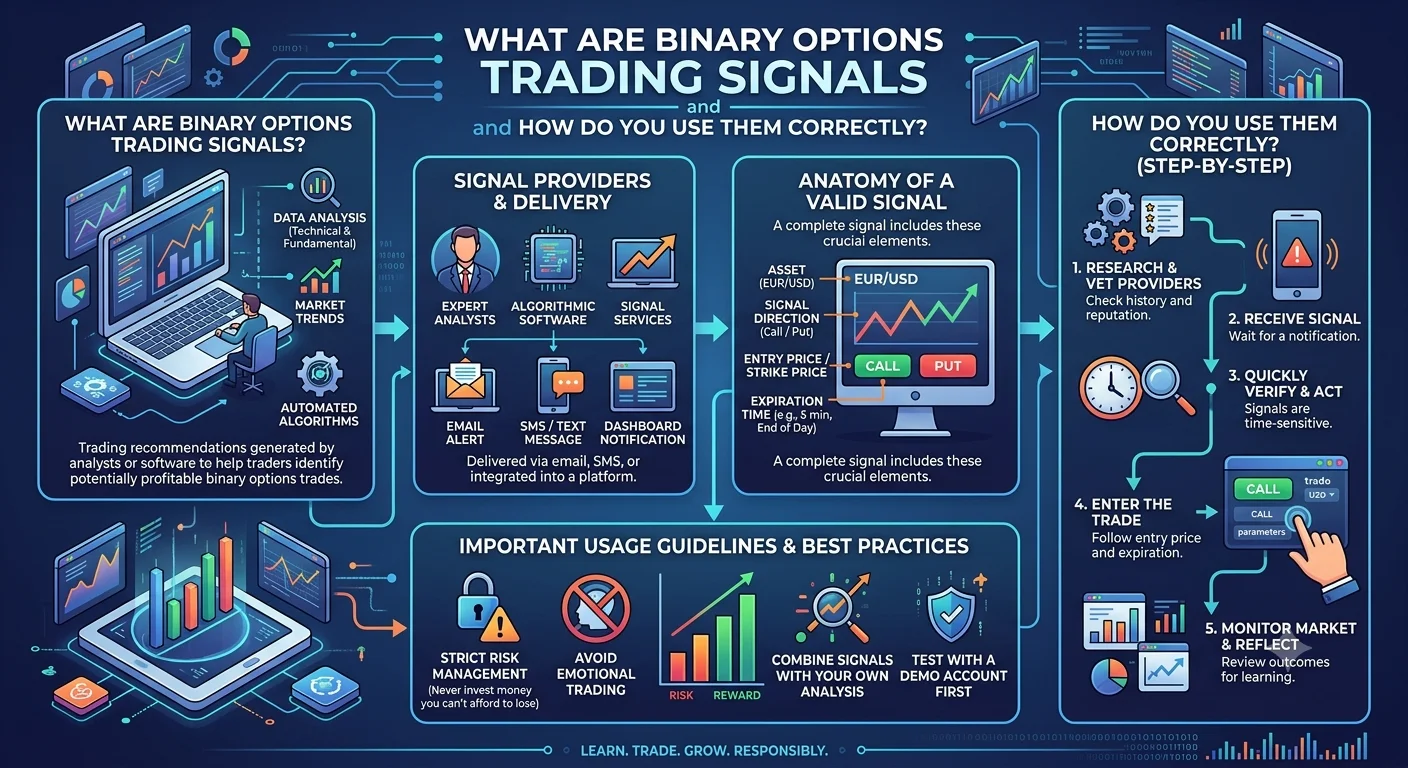
Trading signals are one of the most talked about tools in binary options trading yet many beginners misunderstand what they actually are and how they should be used. This guide explains trading signals clearly and shows you how to use them as a helpful tool rather than a blind shortcut.
What Are Binary Options Trading Signals
A trading signal is a suggestion indicating a potential trading opportunity based on specific market conditions. Signals typically include the asset to trade the suggested direction whether call or put and sometimes a recommended expiry time.
Signals can be generated through technical analysis tools automated software or shared by other traders or signal providers who have analyzed the market and identified what they believe is a favorable trading opportunity.
Where Do Trading Signals Come From
- What Are Binary Options Trading Signals
- Where Do Trading Signals Come From
- Why Trading Signals Can Be Helpful
- Why Trading Signals Should Never Be Followed Blindly
- How to Evaluate Whether a Signal Source Is Trustworthy
- How to Use Trading Signals as a Learning Tool
- Combining Signals With Your Own Analysis
- Common Mistakes Traders Make With Signals
- Frequently Asked Questions About Trading Signals
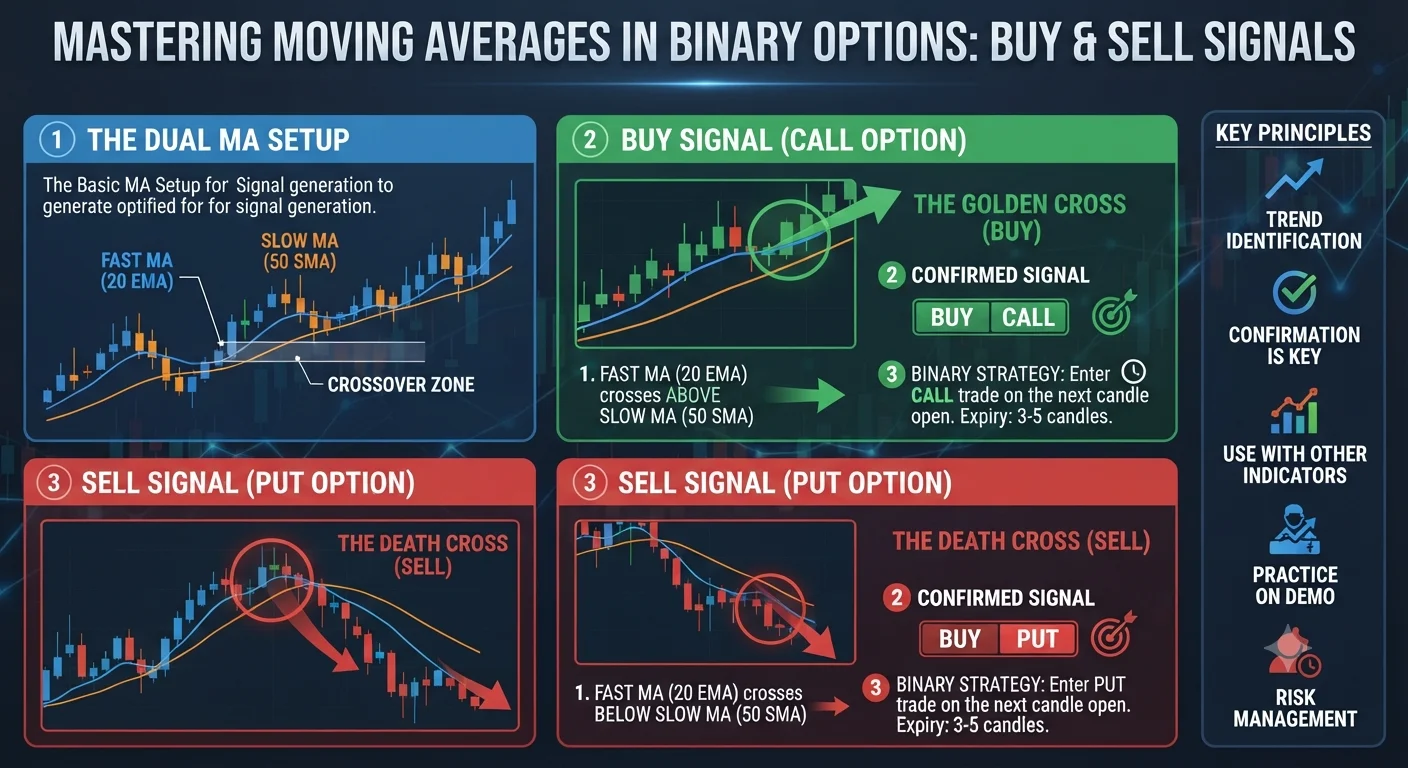
Signals generally come from one of three sources. Technical analysis based signals are generated by applying indicators such as moving averages or momentum oscillators to identify specific chart conditions that historically suggest a particular direction.
Automated signal software uses computer algorithms to scan multiple assets simultaneously and generate signals based on programmed criteria without requiring manual chart analysis from the trader.
Human signal providers are individuals or services that manually analyze charts and share their trading suggestions with subscribers often through messaging apps or dedicated platforms.
Why Trading Signals Can Be Helpful
Signals can save time by highlighting potential opportunities you might not have noticed through your own analysis especially if you are still developing your chart reading skills. They can also serve as a learning tool by helping you understand what specific chart conditions a signal provider considers significant when you study why a particular signal was generated.
For traders managing multiple assets simultaneously signals can help filter through a large amount of market data more efficiently than manually analyzing every single asset individually.
Why Trading Signals Should Never Be Followed Blindly
No trading signal source whether automated or human guarantees accurate predictions every single time. Markets are influenced by countless factors and even well researched signals can result in losing trades due to the inherent unpredictability of price movement.
Blindly following signals without understanding the underlying reasoning prevents you from developing your own trading skills and leaves you completely dependent on an external source that may not always have your best interests in mind especially with certain paid signal services.
How to Evaluate Whether a Signal Source Is Trustworthy
Look for transparency regarding how signals are generated rather than vague claims of guaranteed high win rates. Legitimate signal providers are generally honest about the fact that losses occur and do not promise unrealistic consistent profits.
- Top 5 Binary Options Trading Strategies That Actually Work for New Traders
- What Is Support and Resistance in Trading and How to Use It in Every Trade
Be skeptical of signal services that only show curated screenshots of winning trades without providing verifiable independent tracking of their overall performance over an extended period of time including losing trades.
Avoid signal services that require payment before showing any verifiable track record and be especially cautious of services connected to a specific recommended broker since this can sometimes indicate a financial incentive unrelated to genuine signal accuracy.
Recommended Articles
 STRATEGIES
 STRATEGIES
 STRATEGIES
 STRATEGIES
How to Use Trading Signals as a Learning Tool
Rather than simply executing every signal you receive try analyzing the chart yourself first before checking what a signal suggests. Compare your own analysis with the signal to identify whether you reached similar or different conclusions and consider why any differences might have occurred.
This approach uses signals as a teaching tool to accelerate your own learning rather than creating dependency on an external source for every single trading decision you make.
Combining Signals With Your Own Analysis
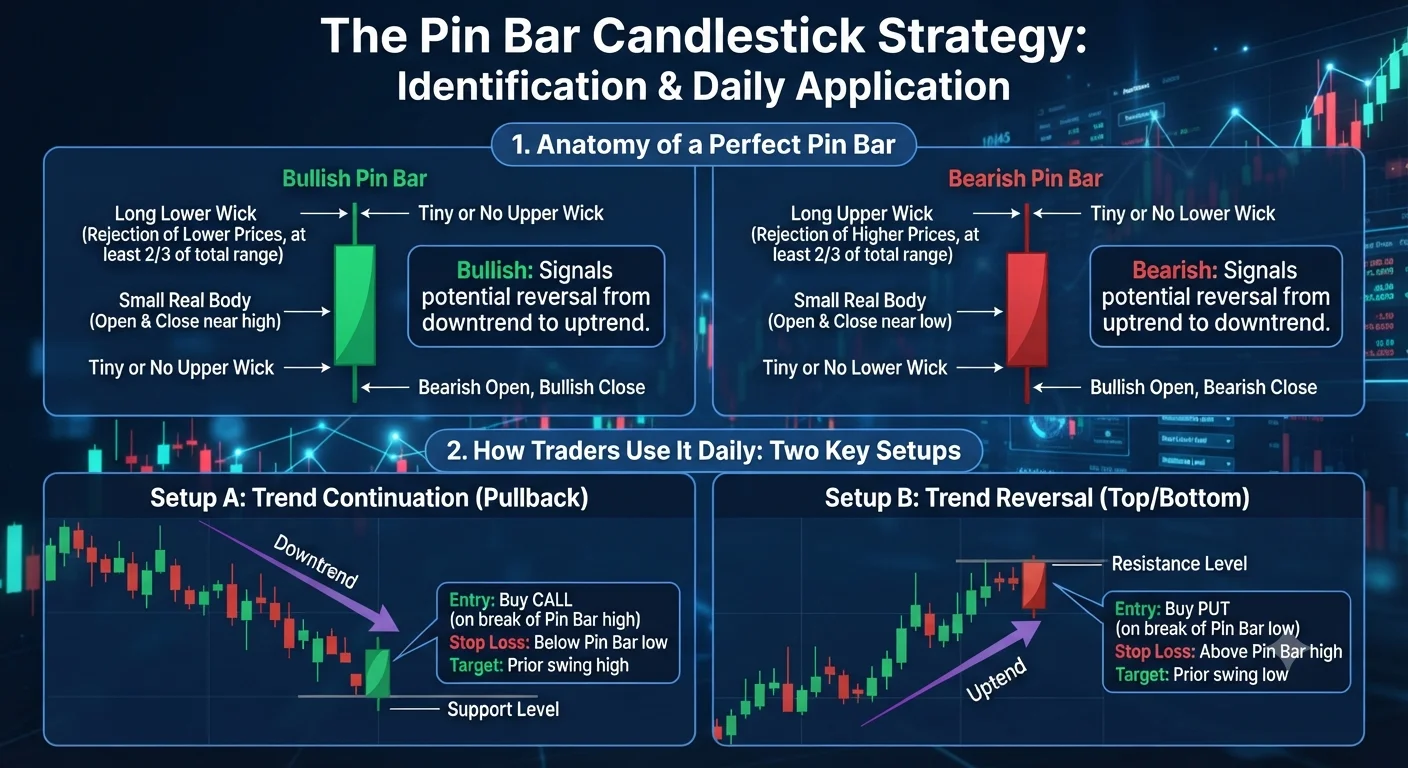
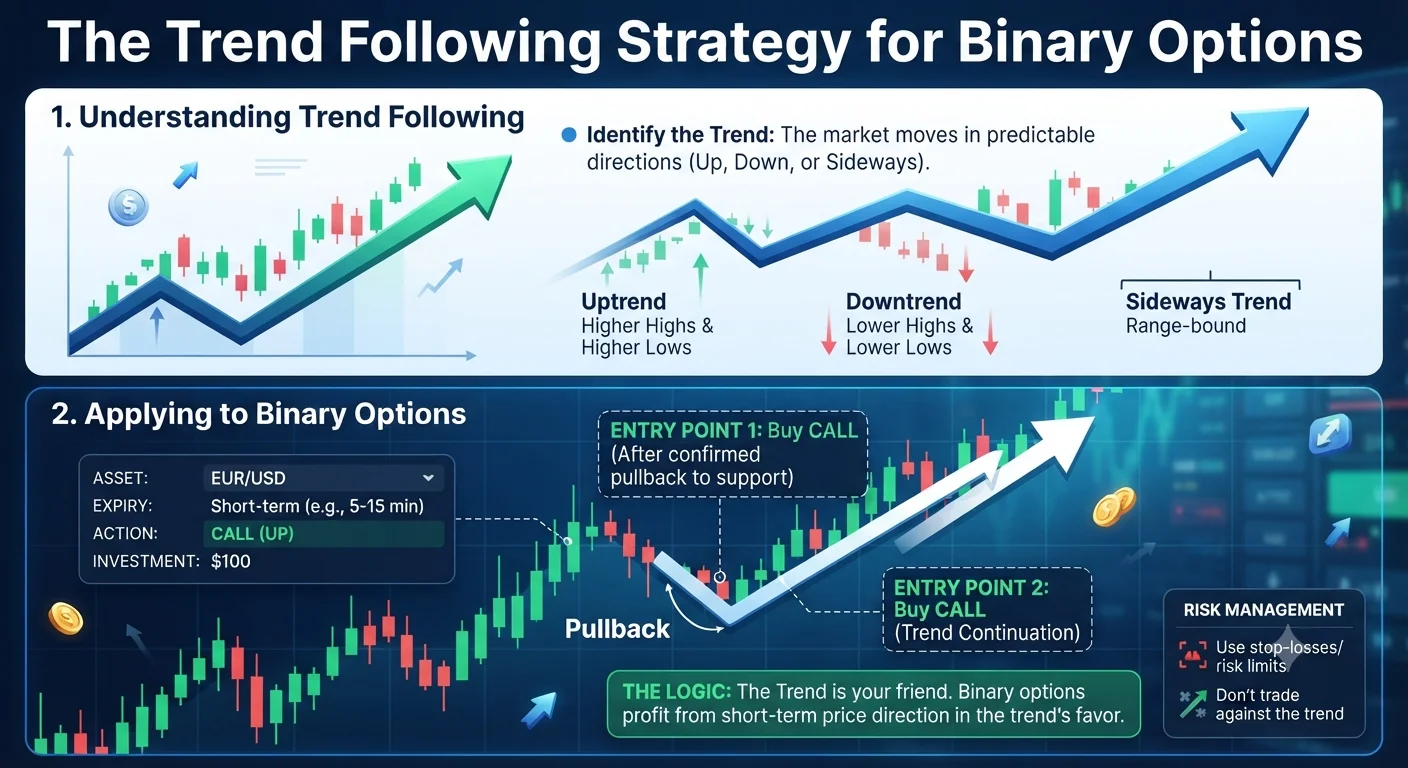
The most balanced approach involves using signals as one additional piece of supporting information alongside your own independent technical analysis rather than as your sole basis for entering a trade. If a signal aligns with what you already observe on the chart such as a clear trend or a bounce off support this agreement increases your confidence in that specific trade.
- How to Read Candlestick Charts for Binary Options Trading with Visual Examples
- What Is Technical Analysis in Trading and Why Every Trader Needs to Understand It
If a signal strongly contradicts your own analysis treat this as a reason to pause and reconsider rather than automatically trusting either source without further thought.
Common Mistakes Traders Make With Signals
One common mistake is following every single signal received without applying any personal risk management which can lead to overtrading especially during periods when a signal service sends frequent alerts. Another common mistake is paying for expensive signal subscriptions before verifying any genuine independent track record of performance.
Many beginners also mistakenly believe signals remove the need to learn trading skills personally. In reality the most successful long term traders typically develop their own analytical abilities rather than remaining permanently dependent on external signal sources.
Frequently Asked Questions About Trading Signals
Are binary options trading signals reliable Reliability varies significantly between sources. No signal source guarantees accurate predictions every time and traders should treat signals as supporting information rather than guaranteed outcomes.
Should I pay for a trading signal service Approach paid signal services with caution and look for verifiable independent track records before paying. Many free educational resources can help you develop your own analytical skills without ongoing subscription costs.
Can I rely entirely on trading signals without learning technical analysis myself While possible in the short term this approach leaves you dependent on an external source and prevents you from developing the independent skills needed for long term consistent trading success.
How do I know if a signal provider is trustworthy Look for transparency about how signals are generated honest acknowledgment that losses occur and verifiable independent performance tracking rather than only curated screenshots of selected wins.
What should I do if a signal contradicts my own chart analysis Treat this disagreement as a signal to pause and reconsider the trade rather than automatically trusting either source without additional thought and analysis.
Beyond signals many traders also use free tools and applications to support their trading decisions. Continue reading our guide on the best free binary options trading signals tools and apps available in 2026.
This article is for educational purposes only and does not constitute financial advice. Trading involves risk and you should only invest money you can afford to lose.