
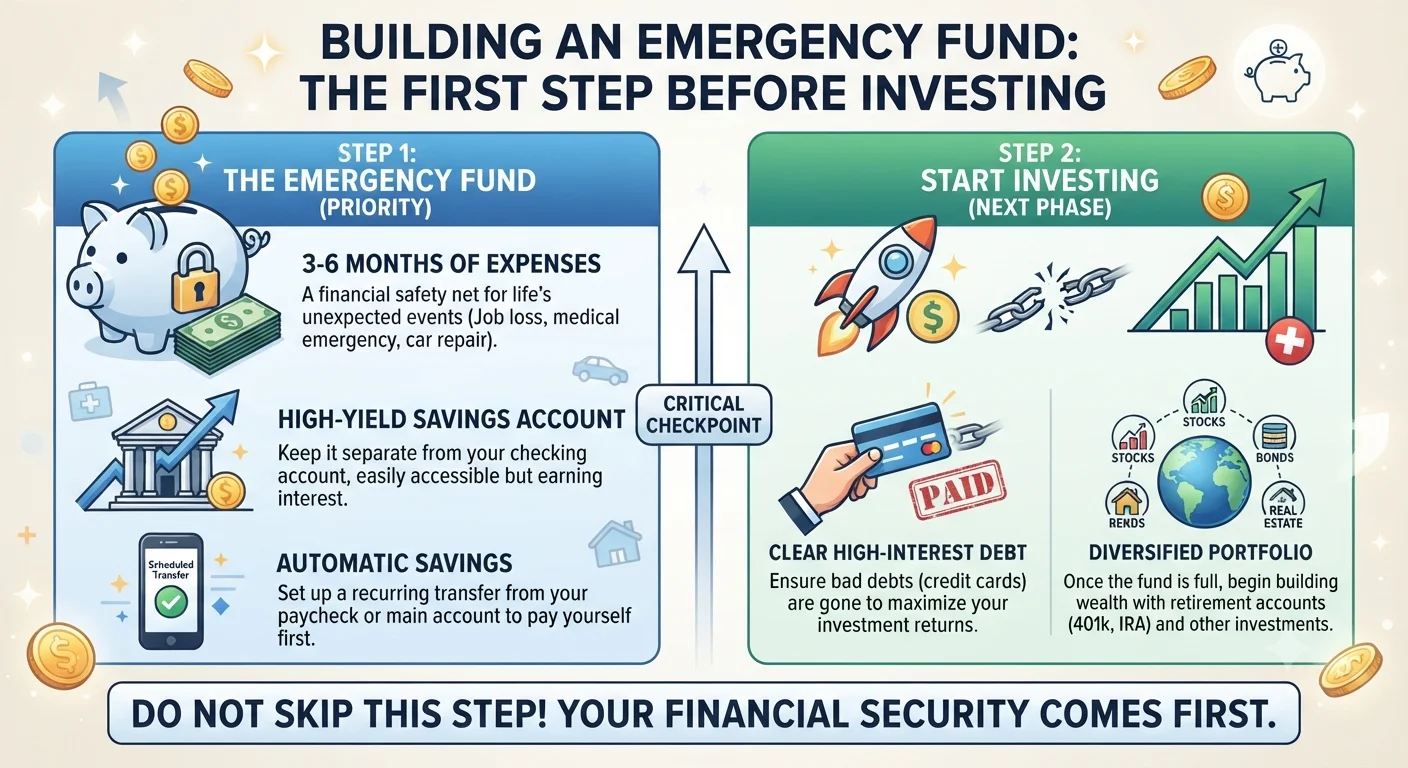
An emergency fund is the financial foundation that every responsible investor and trader needs to build before committing capital to any form of investing or trading. Without this foundation even a genuinely sound investment approach can be disrupted by unexpected life events that force premature withdrawal of invested funds.
This guide explains exactly what an emergency fund is and how to build one systematically even on a modest income.
What Is an Emergency Fund
An emergency fund is a dedicated reserve of liquid accessible money set aside specifically to cover unexpected essential expenses without requiring you to touch your investment or trading capital. Common situations an emergency fund covers include unexpected medical expenses urgent home or vehicle repairs sudden job loss or any other unplanned financial need that arises without advance warning.
The key characteristic of an emergency fund is that it is kept completely separate from investment capital and immediately accessible without penalties delays or market risk when needed urgently.
Why an Emergency Fund Matters for Traders and Investors
- What Is an Emergency Fund
- Why an Emergency Fund Matters for Traders and Investors
- How Much Should Your Emergency Fund Contain
- Step One Calculate Your Monthly Essential Expenses
- Step Two Open a Dedicated Separate Account
- Step Three Make Regular Consistent Contributions
- Step Four Resist Using the Fund for Non Emergencies
- Step Five Begin Investing After Reaching Your Target
- Frequently Asked Questions About Emergency Funds
Without an emergency fund any unexpected financial demand on your resources creates pressure to withdraw trading or investment capital prematurely. This premature withdrawal disrupts your investment plan and can force you to exit positions at unfavorable times driven purely by immediate necessity rather than strategic decision making.
For traders specifically the psychological pressure of knowing that your trading account contains money you might urgently need for living expenses fundamentally compromises the emotional discipline required for sound trading decisions. Knowing your essential needs are covered separately allows you to make trading decisions based purely on analysis and strategy rather than financial desperation.
How Much Should Your Emergency Fund Contain
The commonly recommended size for an emergency fund is three to six months of essential living expenses. Essential expenses include housing costs food utilities transportation and any other costs that continue regardless of your income situation.
- What Is Portfolio Diversification and Why You Should Never Put All Your Money in One Place
- How to Save Money Every Month Even If You Have a Small Income in 2026
- What Is Compound Interest and How It Can Help You Build Real Wealth Over Time
The appropriate size within this range depends on factors including the stability of your income source the number of financial dependents you support and your personal comfort level with financial uncertainty. People with more variable income or more financial dependents typically benefit from building toward the larger end of this range before committing significant capital to investment or trading.
Step One Calculate Your Monthly Essential Expenses
Begin by calculating exactly how much your essential monthly expenses total. Include only genuine necessities rather than discretionary spending since the emergency fund is specifically designed to cover essential needs during unexpected difficult periods rather than maintaining your full normal lifestyle indefinitely.
Multiply this monthly essential amount by three to get your minimum emergency fund target and by six to get your more conservative target amount.
Step Two Open a Dedicated Separate Account
Open a separate savings account specifically designated for your emergency fund rather than keeping these funds mixed with your regular spending account. This physical separation creates a psychological barrier that reduces the temptation to dip into these funds for non emergency purposes and makes it easier to track your progress toward your target amount.
Recommended Articles
 INVESTMENT TIPS
 INVESTMENT TIPS
 INVESTMENT TIPS
 INVESTMENT TIPS
The account should offer easy access without withdrawal penalties since the purpose of these funds requires immediate accessibility when genuinely needed.
Step Three Make Regular Consistent Contributions
Decide on a specific amount you will contribute to your emergency fund from each income payment and treat this contribution with the same priority as essential bills rather than as optional discretionary saving. Even small consistent contributions accumulate meaningfully over time and the discipline of consistent prioritization is as valuable as the specific amounts involved.
Automate this transfer wherever possible to remove the monthly decision from the process entirely.
Step Four Resist Using the Fund for Non Emergencies
Maintain strict standards about what constitutes a genuine emergency versus a non urgent expense that could be planned and saved for separately. Using emergency fund money for non emergency purposes requires rebuilding it from scratch which undermines the protection it was designed to provide.
Planned expenses such as vacations vehicle maintenance or equipment purchases should be saved for through a separate designated fund rather than from emergency reserves.
Step Five Begin Investing After Reaching Your Target
Once your emergency fund reaches your target amount you have established the financial foundation that allows investment and trading activity to proceed from a position of genuine stability. Any returns generated through your investment or trading activity from this point can be either reinvested for growth or directed toward other financial goals without the vulnerability that accompanies investing without this foundational buffer in place.
Frequently Asked Questions About Emergency Funds
How large should my emergency fund be The commonly recommended range is three to six months of essential living expenses with those having more variable income or more financial dependents typically benefiting from building toward the larger end of this range.
Should I invest before completing my emergency fund Most financial guidance recommends completing your emergency fund first since the financial stability it provides protects both your investment capital and your decision making quality from being compromised by unexpected financial demands.
Where should I keep my emergency fund A separate easily accessible savings account without withdrawal penalties is typically appropriate since the purpose requires immediate access when genuinely needed rather than higher returns that might come with restricted access.
What counts as a genuine emergency for using this fund Unexpected essential expenses that cannot be covered through regular income without creating financial hardship such as urgent medical needs essential vehicle or home repairs or income interruption represent appropriate uses of emergency fund resources.
Can I invest and build an emergency fund simultaneously Many people build both simultaneously by allocating a portion of savings to each though prioritizing the emergency fund first ensures the foundational financial stability is established before significant investment capital is committed.
With your financial foundation secure understanding tax implications of your trading activity is another important responsibility. Continue reading our guide on whether you pay tax on binary options trading profits in Pakistan and other countries.
This article is for educational purposes only and does not constitute financial advice. Always make financial decisions based on your own specific circumstances and consult appropriate professionals for personalized guidance.