
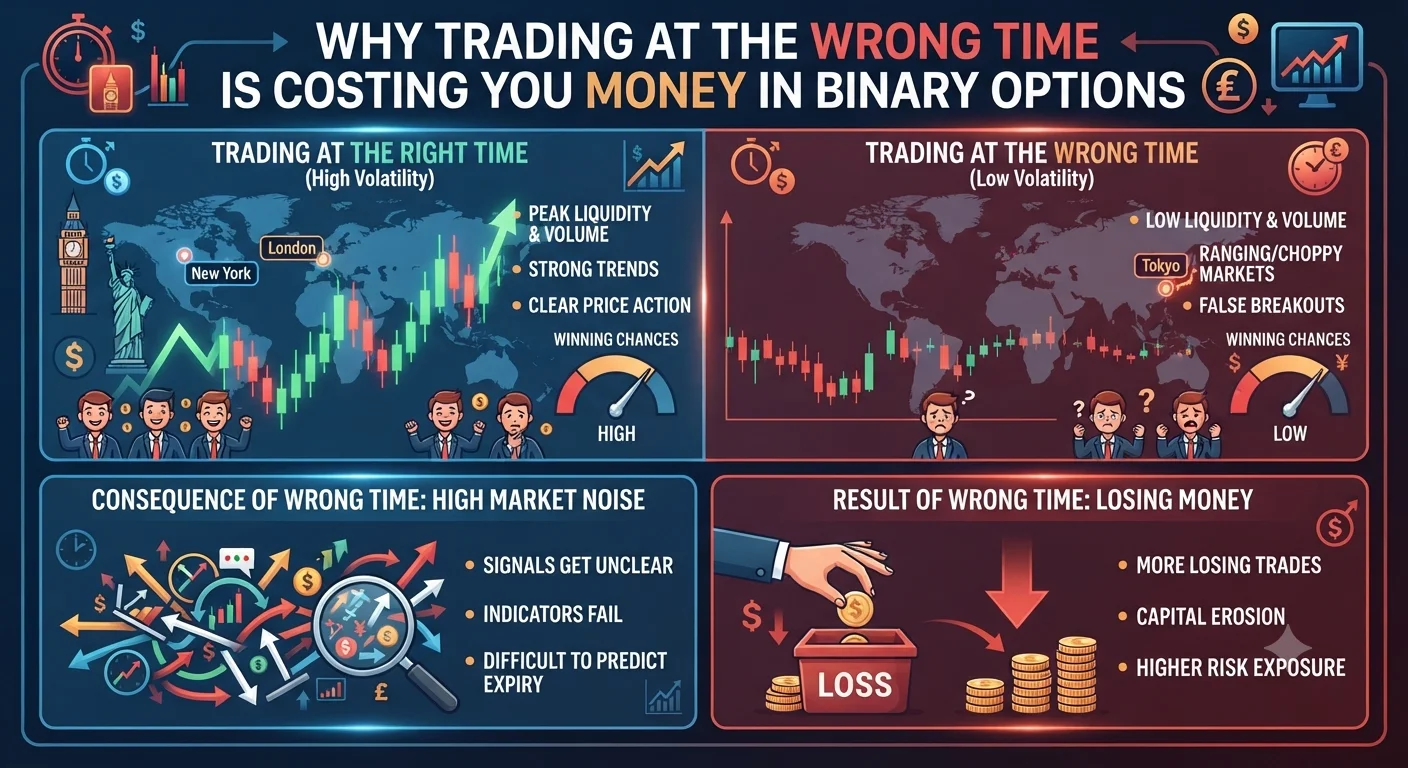
Many traders work hard to improve their strategy and risk management while experiencing frustratingly inconsistent results. One overlooked reason for this inconsistency is that they are frequently trading during market conditions that actively work against the reliability of their chosen approach.
This guide explains exactly how poor timing sabotages trading results and what you can do to fix it.
How Market Timing Affects Technical Analysis Reliability
Technical analysis tools including candlestick patterns support and resistance levels and momentum indicators work best when there is sufficient market volume to create meaningful and consistent price behavior. During low volume periods price moves erratically driven by smaller individual transactions rather than the collective directional activity of large institutional participants.
During these quiet periods the same chart patterns that produce reliable signals during active sessions can appear and then fail to follow through simply because there is insufficient market participation to sustain the expected price movement. Trading the same strategy during both active and quiet periods produces inconsistent results even when the strategy itself is genuinely sound.
The Most Common Wrong Time Mistakes Beginners Make
- How Market Timing Affects Technical Analysis Reliability
- The Most Common Wrong Time Mistakes Beginners Make
- How Low Volume Periods Create False Signals
- How to Identify Favorable Trading Conditions
- The Cost of Trading During Unfavorable Conditions
- Simple Rules to Avoid Trading at the Wrong Time
- Frequently Asked Questions About Wrong Time Trading
Trading during the Asian session with Euro or Dollar based currency pairs is one of the most common timing mistakes among beginners. These specific assets simply do not attract sufficient volume during Asian hours to produce the clear trending behavior that most technical strategies rely upon.
Trading immediately before or during major economic news releases without a specific news based strategy is another common timing error. The price behavior during these periods is often driven by surprise and reaction rather than technical patterns which means standard technical analysis tools become significantly less reliable in the moments surrounding these announcements.
- How to Build a Daily Trading Schedule for Binary Options That Actually Gets Results
- What Are Market Sessions in Trading and Which One Is Best for Binary Options
- What Is the Best Time to Trade Binary Options for Maximum Winning Chances
Trading very late in a session after the primary volume peak has already passed is another subtle timing error that reduces signal reliability even when trading assets that are generally active during that session.
How Low Volume Periods Create False Signals
During low volume periods price often moves in choppy sideways patterns with frequent small reversals rather than clear sustained directional movement. When technical indicators are applied to this choppy price action they frequently generate signals that appear valid on the chart but fail to follow through because there is simply not enough market participation to sustain the predicted move.
This creates a frustrating experience where your strategy appears to work in some sessions but fails repeatedly in others without any obvious difference in your chart reading or decision making. The hidden variable is often the quality of market conditions during which you are trading rather than a flaw in your analytical approach.
How to Identify Favorable Trading Conditions
Favorable trading conditions generally involve clear directional movement with relatively clean chart patterns rather than choppy sideways price action. Volume indicators where available can help confirm whether sufficient market participation is present to support reliable technical analysis signals during a given period.
Recommended Articles
 STRATEGIES
 STRATEGIES
 STRATEGIES
 STRATEGIES
Sticking to your scheduled primary trading session during peak activity hours for your chosen assets is the most straightforward way to consistently trade during favorable conditions rather than attempting to trade across all available hours regardless of market quality.
The Cost of Trading During Unfavorable Conditions
Beyond the direct financial cost of losses generated by technical signals that fail during low volume periods there is also a psychological cost. Repeated failures of normally reliable patterns can shake a trader's confidence in their strategy and lead to premature abandonment of an approach that would actually work well if applied consistently during appropriate market conditions.
Understanding that poor timing rather than a fundamentally flawed strategy is often responsible for these failures allows traders to adjust their schedule rather than unnecessarily overhauling their entire analytical approach.
Simple Rules to Avoid Trading at the Wrong Time
Restrict your trading activity to your predetermined scheduled sessions rather than trading at random times. Avoid placing trades during the thirty minutes immediately before major scheduled economic announcements unless you specifically use a news based strategy. Do not trade during the final thirty to sixty minutes of your chosen session when volume typically begins declining and price behavior becomes less predictable.
If price is showing choppy sideways movement without a clear directional bias step away from the charts rather than attempting to find trading opportunities in conditions that genuinely do not support your strategy.
Frequently Asked Questions About Wrong Time Trading
How can I tell if market conditions are unfavorable for trading Choppy sideways price movement without a clear directional bias frequent false signals from normally reliable patterns and low apparent activity in the market are common signs of unfavorable trading conditions.
Is it always bad to trade during the Asian session Not always. The Asian session can offer favorable conditions for specific assets particularly Japanese Yen or Australian Dollar related pairs but it is generally unfavorable for Euro and Dollar focused strategies due to lower volume in those specific instruments.
Should I always avoid trading around news events If you do not specifically use a news based strategy avoiding the period immediately before and during major announcements reduces your exposure to the unpredictable price behavior typical of these specific windows.
What should I do when I notice choppy market conditions during my scheduled session Reduce your trading activity significantly or stop entirely for that session rather than forcing trades in conditions that do not support your strategy. Protecting your capital by not trading is itself a valid and valuable decision.
Does timing matter more for some strategies than others Yes. Trend following strategies are particularly sensitive to timing since they require clear directional movement to work effectively while range based approaches may perform reasonably during sideways conditions that other strategies cannot handle.
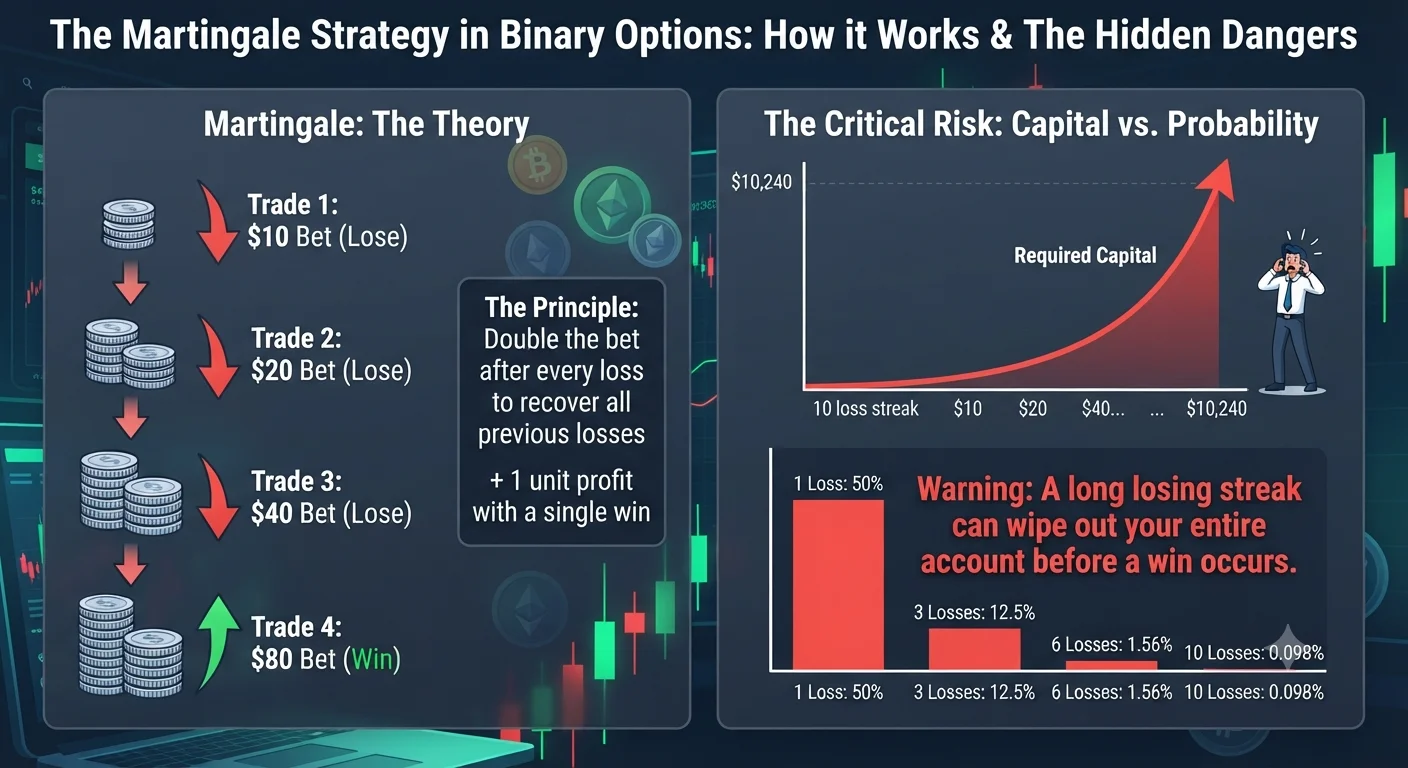
Week two of your content plan is now complete and your strategy cluster is significantly stronger. Continue building momentum with our complete guide on what the Martingale strategy means in binary options and whether you should use it.
This article is for educational purposes only and does not constitute financial advice. Trading involves risk and you should only invest money you can afford to lose.