
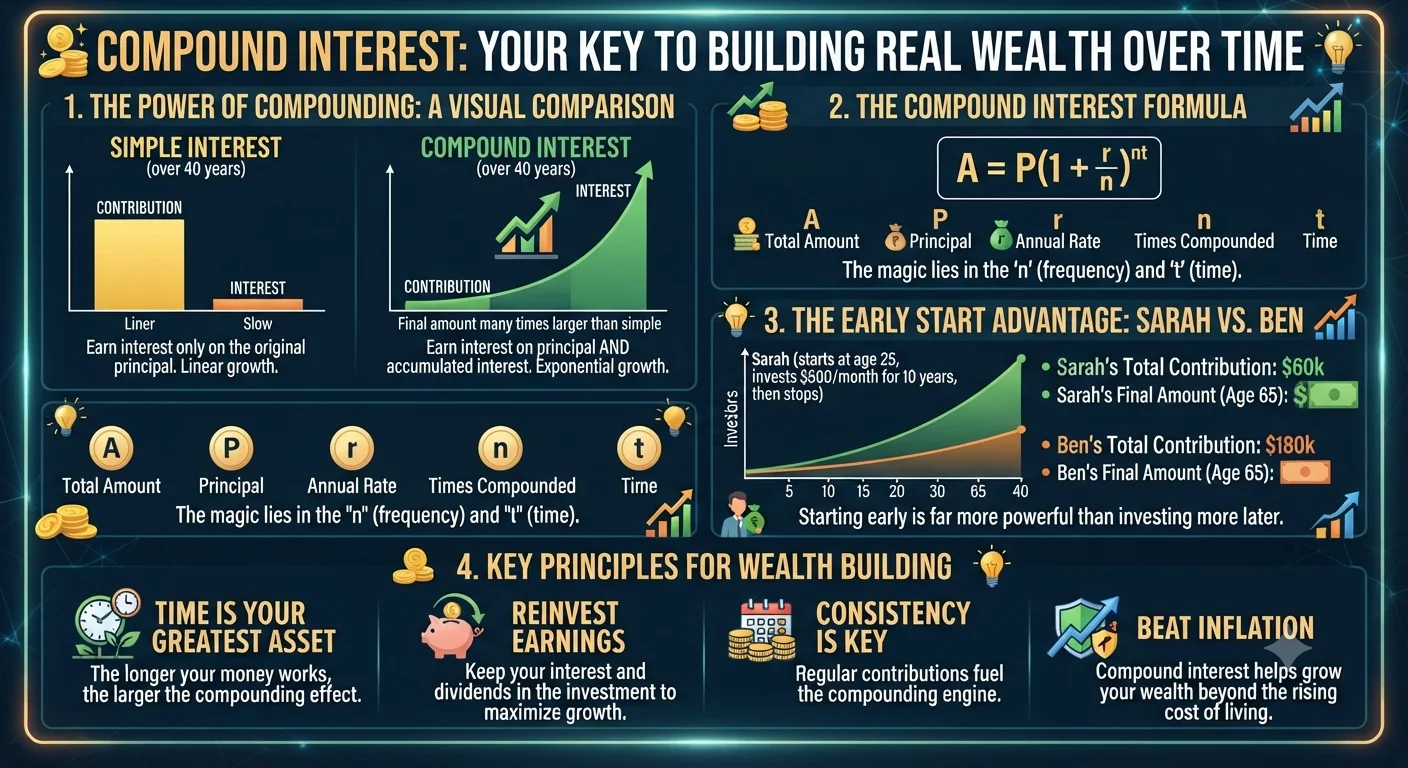
Compound interest is one of the most powerful concepts in personal finance and yet most beginners either do not fully understand it or do not apply it deliberately to their own financial lives. This guide explains exactly what compound interest means and how to make it work in your favor.
What Is Compound Interest
Compound interest is the process by which interest is earned not only on your original principal amount but also on the accumulated interest that has already been added to that principal over previous periods. In simple terms it means your money earns returns on top of returns creating a snowball effect that accelerates growth over time.
This is fundamentally different from simple interest where only the original principal earns returns and accumulated interest does not itself generate further returns.
A Simple Example of Compound Interest in Action
- What Is Compound Interest
- A Simple Example of Compound Interest in Action
- Why Time Is the Most Important Factor in Compound Interest
- How Compound Interest Applies to Trading and Investing
- The Negative Side of Compounding
- How to Apply Compound Interest Thinking to Your Financial Life
- Frequently Asked Questions About Compound Interest
Imagine you invest one thousand dollars at an annual return rate of ten percent. After the first year you have earned one hundred dollars in returns bringing your total to one thousand one hundred dollars.
In the second year that ten percent return is calculated on one thousand one hundred dollars rather than the original one thousand dollars which means you earn one hundred and ten dollars rather than one hundred. By the third year your return is calculated on one thousand two hundred and ten dollars and so the pattern continues with each year's return slightly larger than the previous one.
Over ten twenty or thirty years this compounding effect produces dramatically larger outcomes than simple interest on the same original principal would ever generate.
Why Time Is the Most Important Factor in Compound Interest
The compounding effect becomes significantly more powerful over longer time horizons which makes starting early one of the most valuable decisions any investor can make. The difference in final outcomes between someone who begins investing at twenty compared to someone who starts at thirty with identical amounts and return rates is often surprisingly large due to the additional years of compounding available to the earlier starter.
- 10 Investment Mistakes That Beginners Make and How to Avoid Every Single One
- How Much Money Can You Realistically Make From Binary Options Trading Each Month
- What Is Passive Income and Can Binary Options Become a Source of It
This principle means that even very small regular investment contributions made consistently over a long period can eventually produce meaningful wealth simply through the power of time and compounding rather than requiring large starting amounts.
How Compound Interest Applies to Trading and Investing
For traders and investors the compound interest principle applies when profits are reinvested into the account rather than withdrawn immediately. A trader who consistently earns a modest percentage return and reinvests those profits rather than withdrawing them allows the compounding effect to gradually grow their account balance over time.
This is one reason why focusing on developing genuine consistent skills rather than chasing large immediate returns serves long term wealth building goals more effectively. A modest consistent return compounded over time can produce impressive results that occasional large wins followed by large losses never reliably achieve.
Recommended Articles
 INVESTMENT TIPS
 INVESTMENT TIPS
 INVESTMENT TIPS
 INVESTMENT TIPS
The Negative Side of Compounding
While compound interest works powerfully in your favor when you are earning returns it works equally powerfully against you when you carry high interest debt. Credit card balances and other high interest obligations compound in the same way meaning the amount owed grows progressively faster if not addressed promptly.
This is why financial advisors commonly recommend addressing high interest debt before committing significant capital to investing since the compounding cost of that debt frequently exceeds the reasonable return expectations from most investments.
How to Apply Compound Interest Thinking to Your Financial Life
Start investing or saving whatever amount you can genuinely afford as early as possible rather than waiting until a larger amount feels more meaningful. Reinvest returns rather than withdrawing them immediately wherever your specific situation permits. Avoid high interest debt that creates negative compounding working against your overall financial progress.
Be patient with the process since the most dramatic compounding effects typically become visible over years and decades rather than months which requires trusting the mathematical reality of the process before the results become dramatically visible.
Frequently Asked Questions About Compound Interest
What is the difference between compound and simple interest Simple interest is calculated only on the original principal amount while compound interest is calculated on both the original principal and all previously accumulated interest creating accelerating growth over time.
Why does starting to invest early matter so much Earlier investment allows more compounding periods to occur before your target date which produces dramatically larger final outcomes compared to starting later with identical amounts and return rates.
Does compound interest work the same way with trading profits The same principle applies when trading profits are reinvested rather than withdrawn since the growing account balance then generates larger returns on each subsequent profitable period.
How does compound interest work against me High interest debt compounds in the same way as investment returns meaning the amount owed grows progressively faster over time if not addressed which is why reducing high interest obligations is typically prioritized before significant investment activity.
Can small amounts really grow significantly through compounding Yes. Consistent small contributions compounded over long periods can produce surprisingly large outcomes due to the exponential nature of the compounding process particularly when sufficient time is available for the effect to develop fully.
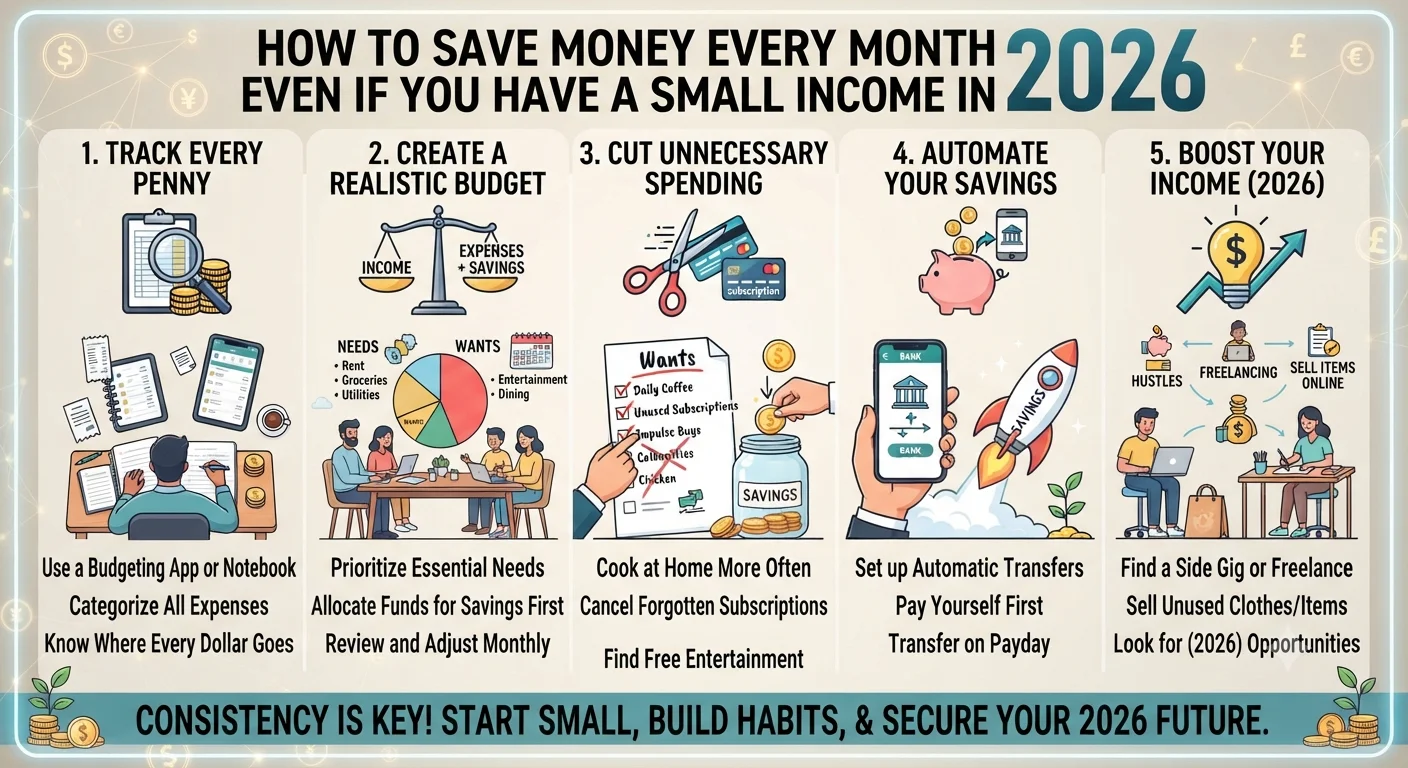
Understanding compound interest helps you appreciate why building consistent saving habits matters alongside trading. Continue reading our guide on How to Save Money Every Month Even If You Have a Small Income in 2026.
This article is for educational purposes only and does not constitute financial advice. Investing involves risk and past performance does not guarantee future results.