
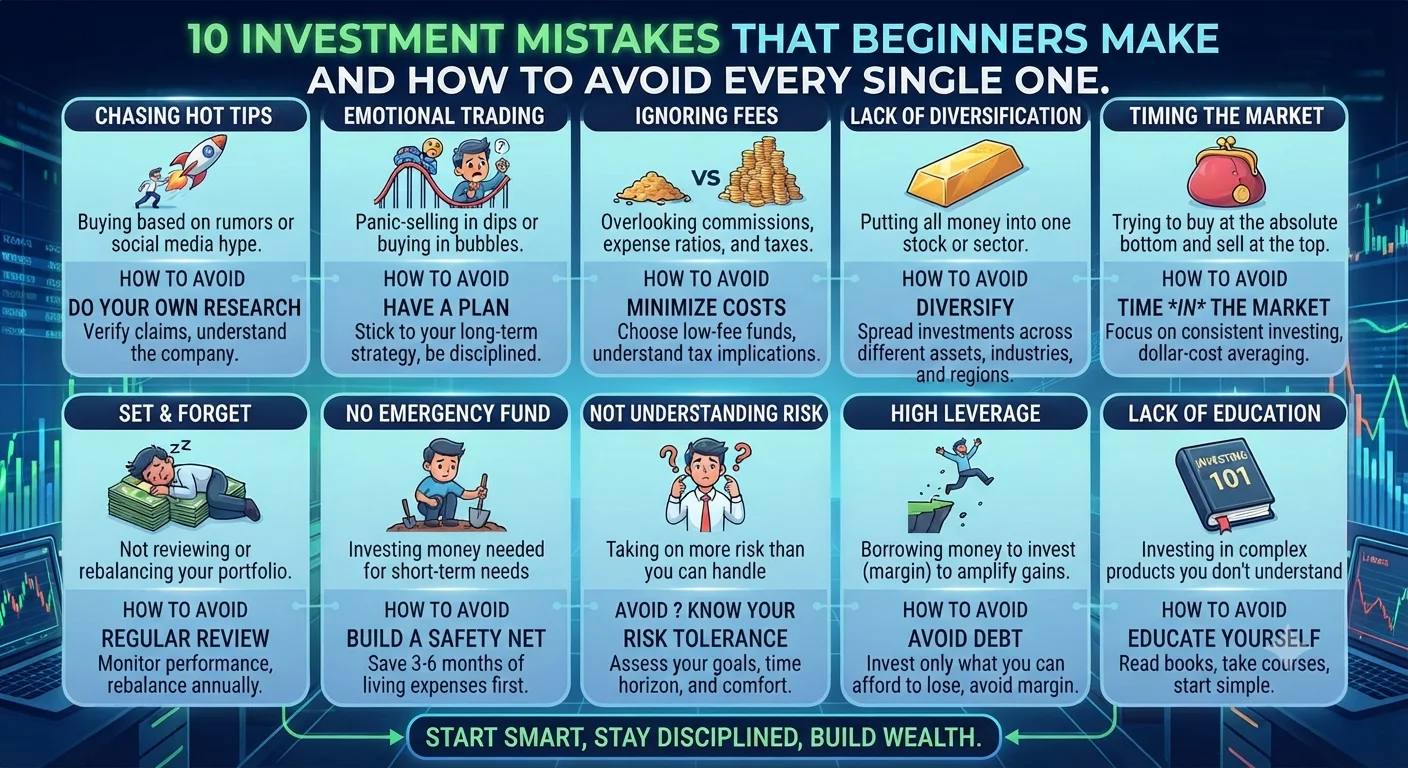
Most investing mistakes follow predictable patterns that repeat across countless beginners regardless of which specific market or vehicle they choose. This guide identifies the ten most common investment mistakes and explains exactly how to avoid each one.
Mistake One Investing Without a Clear Plan
Many beginners deposit money and start investing without a clearly defined plan outlining their goals risk tolerance and approach. Without this foundation decisions tend to be reactive and inconsistent rather than driven by a coherent strategy.
How to avoid it: Before investing a single dollar write down your specific goals your risk tolerance and the basic approach you plan to follow. Review and update this plan regularly as your knowledge and situation evolve.
Mistake Two Investing Money You Cannot Afford to Lose
- Mistake One Investing Without a Clear Plan
- Mistake Two Investing Money You Cannot Afford to Lose
- Mistake Three Chasing Past Performance
- Mistake Four Ignoring Risk Management Completely
- Mistake Five Making Decisions Based on Emotions
- Mistake Six Putting Everything Into One Investment
- Mistake Seven Trusting Unverified Tips and Recommendations
- Mistake Eight Expecting Results Too Quickly
- Mistake Nine Neglecting to Keep Records
- Mistake Ten Stopping Learning After Initial Results
- Frequently Asked Questions About Investment Mistakes
Investing money needed for rent food or emergency expenses creates financial pressure that inevitably compromises your decision making quality. When you genuinely need the invested money back urgently you cannot make rational patient investment decisions.
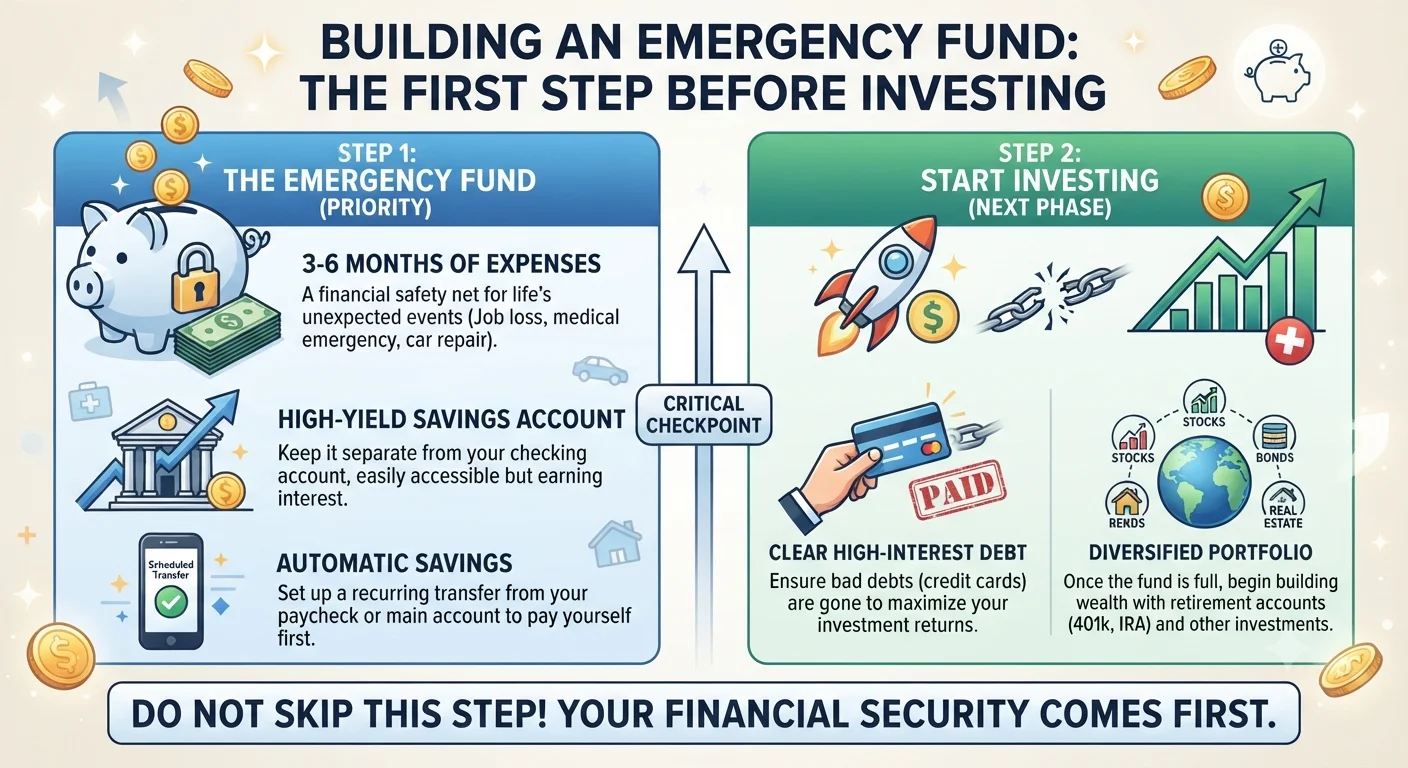
How to avoid it: Only invest money that you can genuinely afford to lose completely without it affecting your essential financial obligations. Build an adequate emergency fund before committing any capital to investing.
Mistake Three Chasing Past Performance
Many beginners invest in an asset or strategy specifically because it performed very strongly in the recent past under the assumption that this recent performance will continue indefinitely. This approach frequently leads to buying at or near peak prices just before performance reverts.
How to avoid it: Evaluate current conditions and fundamentals rather than making decisions based primarily on recent performance history. Strong past performance does not guarantee continued future results.
Mistake Four Ignoring Risk Management Completely
Some beginners focus entirely on potential profits while completely neglecting to think about how much they could lose if their investment performs poorly. This selective attention creates unrealistic expectations and vulnerability to significant losses.
How to avoid it: Before every investment decision explicitly consider how much you could lose and ensure this potential loss remains within your predetermined acceptable risk tolerance.
Mistake Five Making Decisions Based on Emotions
Fear and greed are the two dominant emotions that damage beginner investment results. Fear leads to selling during market downturns at the worst possible moment while greed leads to chasing overvalued opportunities or taking excessive risks during strong performance periods.
How to avoid it: Make investment decisions based on your predetermined plan and analysis rather than emotional reactions to recent market movements. Regular journaling helps identify emotional patterns in your decision making.
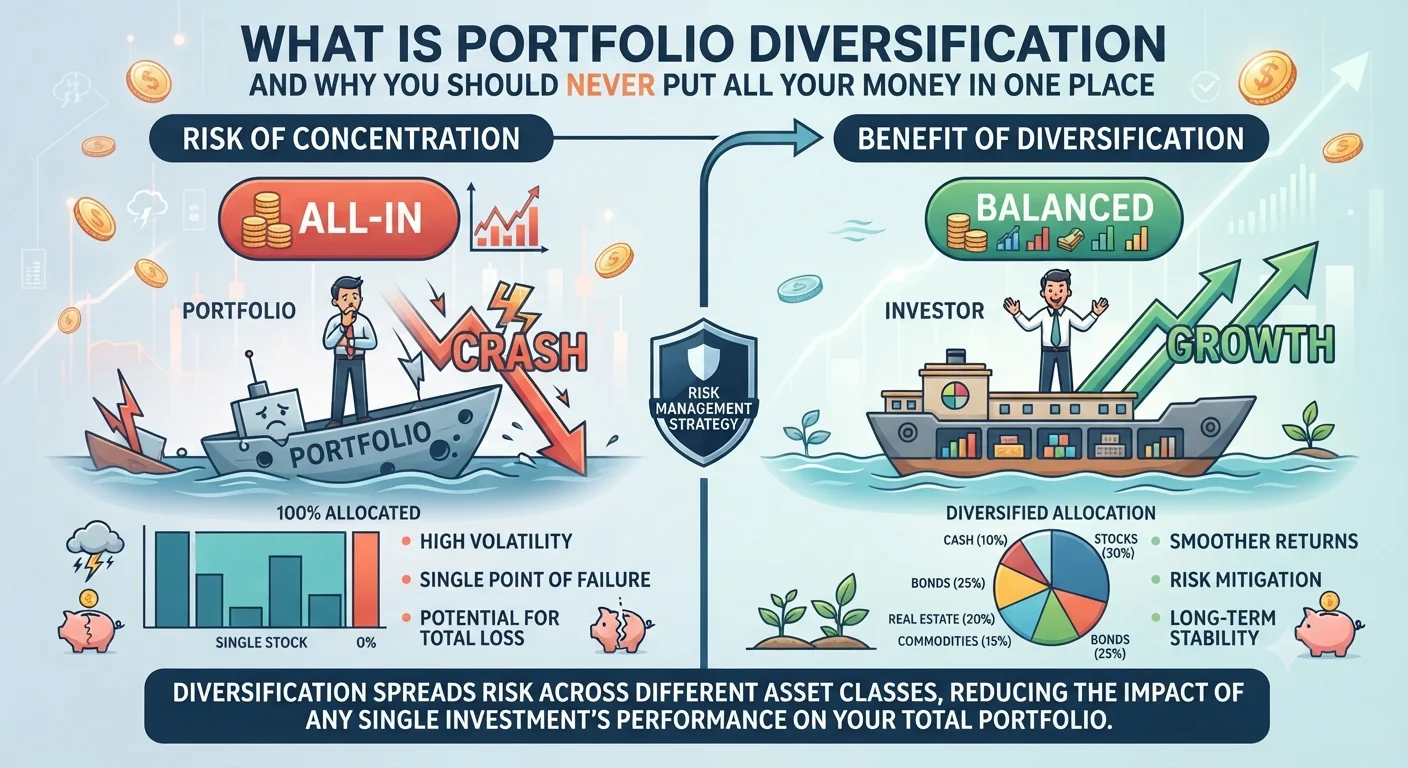
Mistake Six Putting Everything Into One Investment
Concentrating all your capital in a single asset strategy or platform creates enormous vulnerability since a single poor performance can devastate your entire invested capital simultaneously.
- How Much Money Can You Realistically Make From Binary Options Trading Each Month
- What Is Passive Income and Can Binary Options Become a Source of It
- How to Invest Money as a Beginner in 2026 Without Losing Everything
How to avoid it: Spread your capital across different assets strategies or investment vehicles so that no single poor performer can eliminate your entire invested capital at once.
Recommended Articles
 INVESTMENT TIPS
 INVESTMENT TIPS
 INVESTMENT TIPS
 INVESTMENT TIPS
Mistake Seven Trusting Unverified Tips and Recommendations
Social media posts unsolicited messages and anonymous online recommendations are among the most unreliable sources of investment guidance yet many beginners make significant financial decisions based on these unverified suggestions.
How to avoid it: Conduct your own independent research before making any investment decision rather than relying on unverified recommendations from sources whose credentials motivations and track records cannot be confirmed independently.
Mistake Eight Expecting Results Too Quickly
Many beginners become frustrated and change their approach prematurely after a short difficult period without giving their chosen strategy sufficient time to demonstrate whether it is genuinely effective across a meaningful sample of experiences.
How to avoid it: Commit to evaluating any approach across a meaningful period and number of experiences before concluding it is ineffective. Single short term results in either direction rarely provide sufficient information for definitive conclusions about a strategy's genuine effectiveness.
Mistake Nine Neglecting to Keep Records
Without records of investment decisions and their outcomes it is impossible to identify patterns learn from mistakes or confirm what is actually working versus what is producing poor results. Memory alone is notoriously unreliable for accurately assessing past performance.
How to avoid it: Keep detailed records of every investment decision including your reasoning at the time and the eventual outcome. Review these records regularly to identify patterns worth addressing or continuing.
Mistake Ten Stopping Learning After Initial Results
Some beginners stop actively studying and improving after achieving initial success which can lead to complacency that eventually produces poor results when market conditions shift or new challenges arise that their current knowledge is insufficient to handle.
How to avoid it: Treat investing and trading as ongoing learning processes rather than something that can be mastered once and never revisited. Commit to continued education and regular honest self assessment of your current strengths and weaknesses.
Frequently Asked Questions About Investment Mistakes
What is the single most common investment mistake beginners make Investing money they cannot genuinely afford to lose is consistently among the most damaging mistakes since it compromises both financial stability and the quality of subsequent decision making under financial pressure.
How can I avoid making emotional investment decisions Maintaining a written plan defining your approach in advance combined with regular journaling to identify emotional patterns in your decision making are among the most effective approaches for reducing emotional influences.
Why is diversification important for beginner investors Diversification reduces the risk that any single poor performing investment can devastate your entire capital since losses are spread across multiple positions rather than concentrated in one.
How do I know if a trading tip is trustworthy Verify any recommendation through independent research rather than trusting it based on the source alone. Be especially skeptical of unsolicited tips from unverified sources with no demonstrable track record.
Should beginners change their approach after a bad week Not necessarily. A single week of poor results rarely provides sufficient evidence that an approach is fundamentally flawed. Evaluate performance over a meaningful period before concluding that a significant change is warranted.
Avoiding these mistakes keeps your capital protected while your skills develop. Continue your learning journey with our guide on understanding what compound interest means and how it can help you build real wealth over time.
This article is for educational purposes only and does not constitute financial advice. Investing involves risk and you should only commit money you can genuinely afford to lose.