
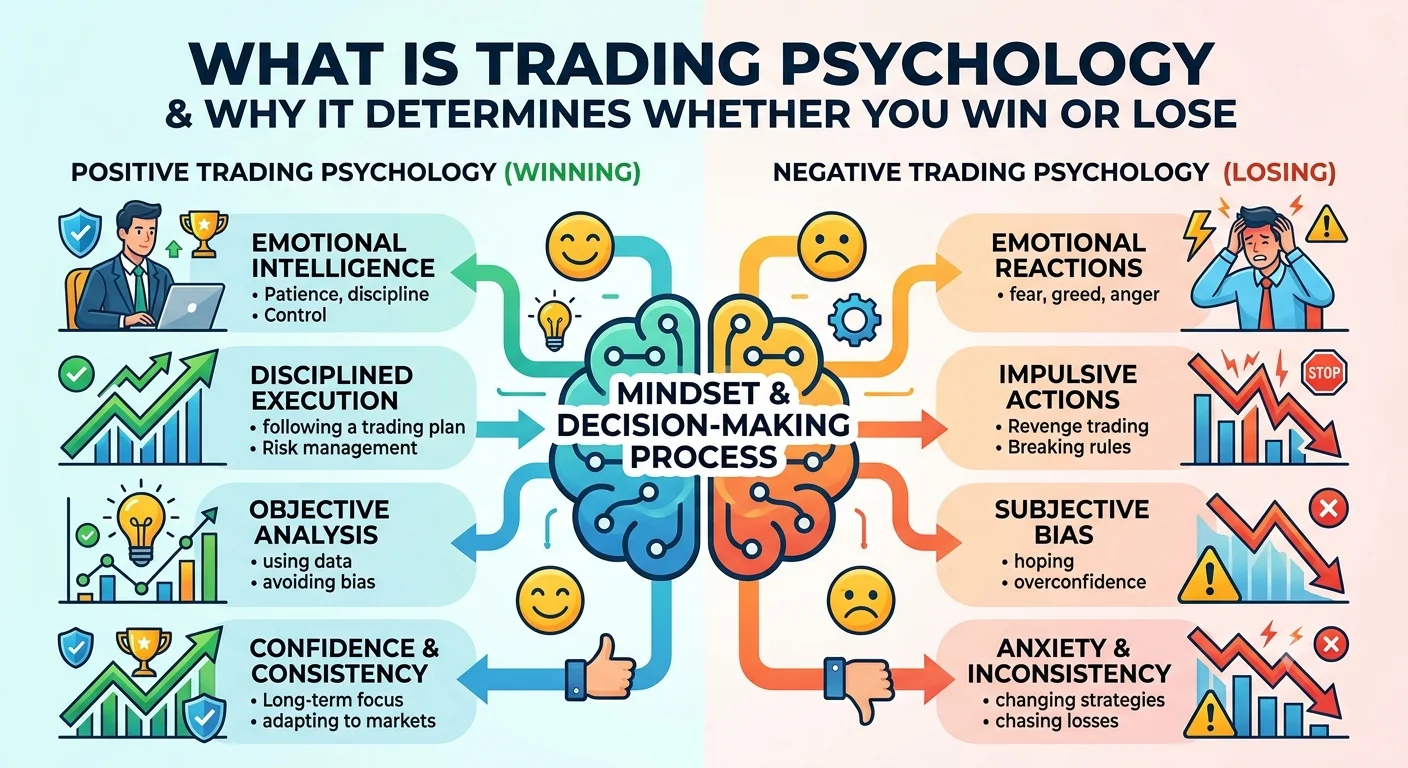
Many traders spend significant time studying charts and strategies while overlooking one of the most influential factors in their results. Their own mind. This guide explains what trading psychology means and why mastering it often matters more than any specific strategy or indicator.
What Is Trading Psychology
Trading psychology refers to the emotional and mental state that influences your trading decisions including fear greed excitement and frustration. It encompasses how well you manage these emotions while making decisions under uncertainty and financial pressure.
Even traders with strong technical analysis skills and well developed strategies can experience poor results if their emotional state leads them to deviate from their plan during actual live trading sessions.
Why Trading Psychology Matters So Much
- What Is Trading Psychology
- Why Trading Psychology Matters So Much
- Common Emotional Patterns That Hurt Traders
- Fear
- Greed
- Revenge Trading
- Overconfidence
- How to Develop Stronger Trading Psychology
- The Role of a Trading Journal in Managing Psychology
- Why Discipline Matters More Than Motivation
- Frequently Asked Questions About Trading Psychology
Markets are inherently unpredictable and even the best strategies experience losing trades regularly. How you respond emotionally to these losses often determines whether you remain disciplined and consistent or whether you begin making impulsive decisions that compound your difficulties further.
A trader who panics after a single loss and immediately increases their next trade size to recover the loss quickly is allowing emotion to override their predetermined risk management plan. This single emotional reaction can undo weeks of careful disciplined trading in a matter of minutes.
Common Emotional Patterns That Hurt Traders
Fear
Fear can cause traders to hesitate on valid trading opportunities that meet their predetermined criteria simply because recent losses have made them anxious about placing another trade. This hesitation can result in missed opportunities that a more emotionally balanced trader would have confidently taken.
Greed
Greed often emerges after a winning streak and can lead traders to increase their position size beyond their predetermined risk management rules in an attempt to maximize profits during what feels like a particularly favorable period. This behavior frequently results in giving back previous gains when the inevitable losing trade eventually occurs.
Revenge Trading
Revenge trading occurs when a trader attempts to immediately recover a recent loss by placing another trade often with increased size and without proper analysis. This emotional reaction frequently leads to additional losses since the decision is driven by frustration rather than genuine analytical reasoning.
Overconfidence
Overconfidence can develop after a string of successful trades leading a trader to believe they have found a guaranteed winning formula. This mindset often results in abandoning proper risk management since the trader feels invincible which eventually leads to significant losses when market conditions inevitably shift.
How to Develop Stronger Trading Psychology
Start by accepting that losses are a normal and expected part of trading rather than viewing each loss as a personal failure or sign that something is fundamentally wrong with your approach. This mental shift helps reduce the emotional intensity associated with individual losing trades.
- How to Create a Trading Plan for Binary Options That Keeps You Disciplined
- What Is the 1 Percent Rule in Trading and How to Use It to Protect Yourself
- How Much Money Do You Need to Start Binary Options Trading as a Beginner
Stick rigidly to your predetermined trading plan and risk management rules regardless of recent emotional reactions to wins or losses. Treating your trading plan as a fixed set of rules rather than flexible suggestions helps remove emotional decision making from the equation during actual live trading.
Recommended Articles
 INVESTMENT TIPS
 INVESTMENT TIPS
 INVESTMENT TIPS
 INVESTMENT TIPS
Take breaks after particularly emotional trading sessions whether due to a significant loss or an unusually large win. Stepping away allows your emotional state to settle before returning to make further trading decisions with a clearer more rational mindset.
The Role of a Trading Journal in Managing Psychology
Keeping a detailed trading journal that includes not just the technical details of each trade but also your emotional state at the time of the decision can reveal valuable patterns over time. You might notice that your worst trading decisions consistently occur after a loss or during periods of personal stress unrelated to trading itself.
Recognizing these patterns allows you to develop specific strategies for managing your particular emotional triggers rather than addressing trading psychology as a vague general concept.
Why Discipline Matters More Than Motivation
Motivation can fluctuate day to day based on your mood recent results and external life circumstances. Discipline however involves following your predetermined rules regardless of how you currently feel in the moment.
Building genuine discipline rather than relying on motivation alone creates the consistency needed for long term trading success since you continue following your risk management and strategy rules even during periods when motivation feels low or emotions feel particularly intense.
Frequently Asked Questions About Trading Psychology
Why is trading psychology considered so important Even traders with strong technical skills can experience poor results if emotional reactions lead them to abandon their predetermined trading plan and risk management rules during live trading sessions.
What is revenge trading Revenge trading occurs when a trader attempts to immediately recover a recent loss by placing another trade often with increased size and without proper analysis driven by frustration rather than genuine reasoning.
How can a trading journal help with psychology Recording your emotional state alongside technical trade details can reveal patterns over time such as specific triggers that consistently lead to poor decision making which allows you to address these patterns directly.
Is overconfidence after winning trades dangerous Yes. Overconfidence can lead traders to abandon proper risk management since they feel invincible after a winning streak which often results in significant losses when market conditions eventually shift.
Can trading psychology be improved over time Yes. With self awareness consistent journaling and deliberate practice following predetermined rules regardless of emotional state most traders can meaningfully improve their psychological discipline over time.
Recognizing overtrading is closely connected to understanding your own trading psychology. Continue learning with our guide on what overtrading in binary options means and how to recognize it in yourself.
This article is for educational purposes only and does not constitute financial advice. Trading involves risk and you should only invest money you can afford to lose.